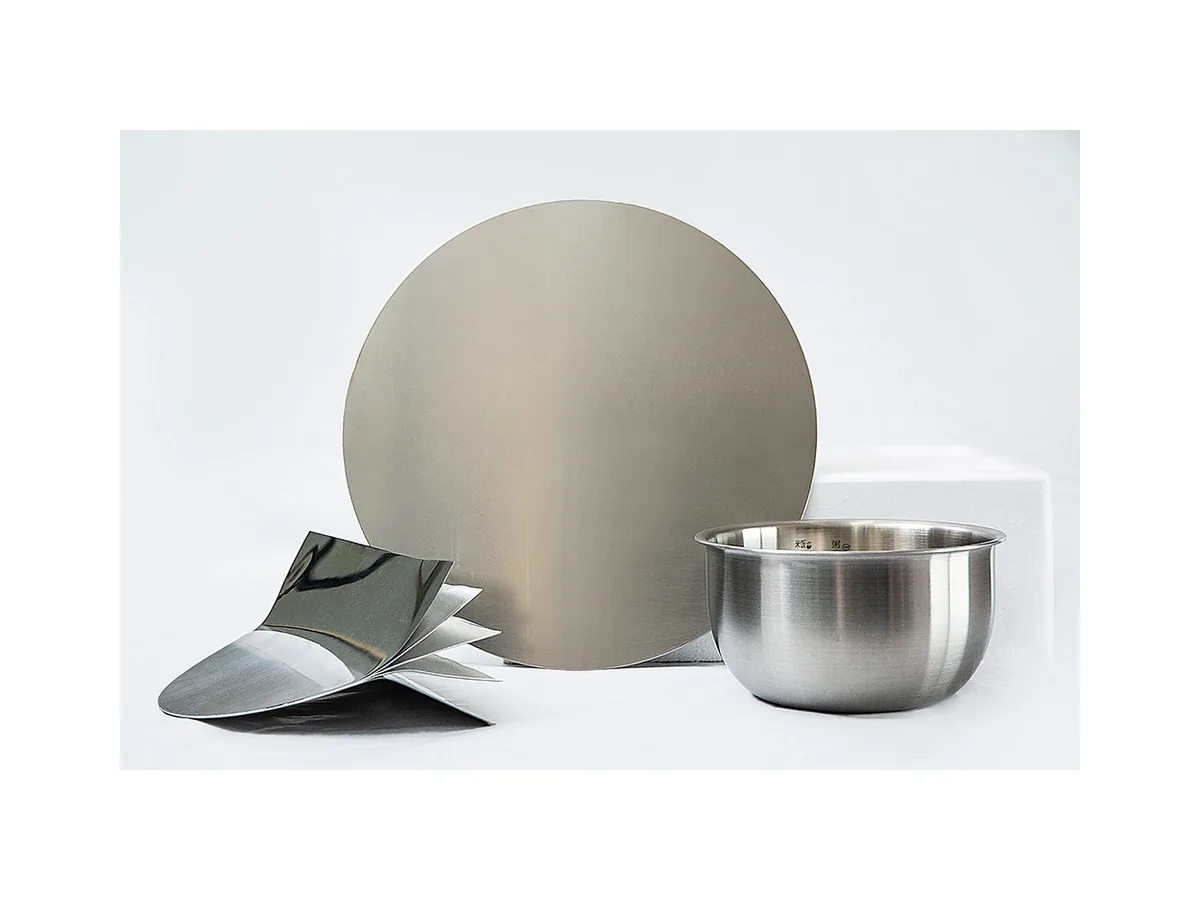
Buying
Clad discs or clad sheet: which should you buy?
The material is the same. What changes is who cuts it, who carries the scrap, and where the tolerance is measured.
At a glance
Specification at a glance
| Factor | Cut discs | Sheet or coil |
|---|---|---|
| Tooling | Supplier blanks to your diameter | You blank in-house |
| Yield | Scrap stays at the supplier | Scrap stays with you |
| Tolerance | Measured on the disc | Measured across the sheet |
| Handling | Press-ready, stacked and packed | Needs storage and a blanking step |
| Change of size | New diameter, same material | Cut differently from stock |
| Best for | One or two sizes at volume | Many sizes, or your own blanking |
The decision is about where the scrap lives
Blanking a disc from a sheet leaves a web of offcut. If the supplier blanks, that web is priced into the disc and stays in their yard. If you blank, you buy the sheet by weight and the web is yours to sell, reuse or write off. At small volumes the difference is noise; at container volumes it decides the purchase route.
Tolerance is measured in a different place
Sheet is inspected across its width and length, and the tolerance statement refers to that. A disc is inspected on its own diameter, which is a smaller surface and a different measurement. A specification written for sheet cannot simply be copied onto a disc order, and a supplier who quotes the same tolerance for both has not thought about it.
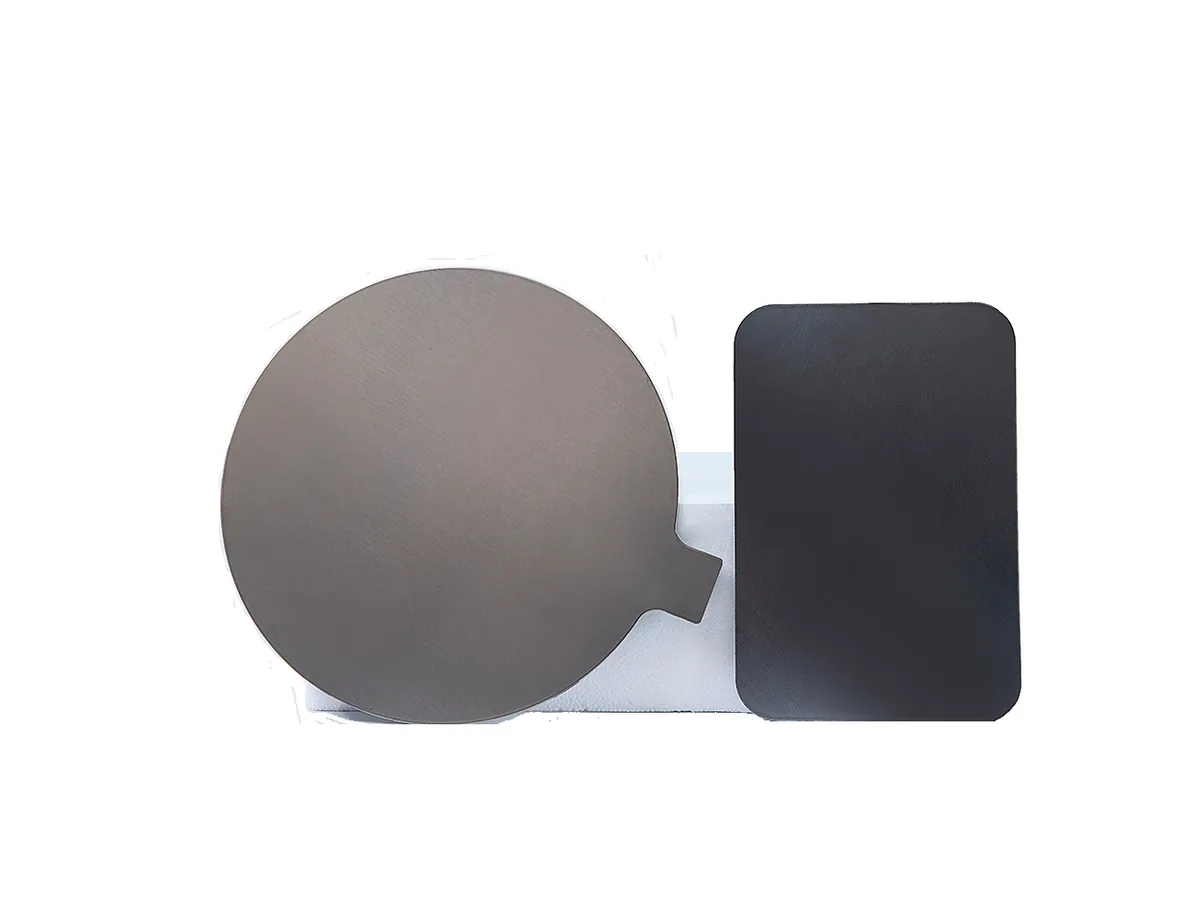
Handling, storage and the second operation
Discs arrive press-ready: stacked, separated, packed to a count. Sheet arrives as a pallet that needs dry storage, a blanking press and a person to run it. For a plant that already blanks, buying sheet is cheaper per kilo. For a plant that does not, adding a blanking step to save a few percent is rarely worth it.
When to buy which
Buy discs when the range is one or two diameters at steady volume, when the press is the bottleneck, and when the packing needs to arrive ready to run. Buy sheet or coil when the range changes often, when you already blank for several products, or when the offcut has a use on another line.
A third route exists for large programmes: coil, cut and blanked at the plant to your nesting, which keeps the yield benefit and removes the blanking step. It requires a diameter and a volume that justify the setup.
Questions
Common questions
Is clad disc more expensive per kilo than sheet?
Usually yes, because the blanking scrap is priced in. The comparison only makes sense against your own blanking cost and the value you can recover from offcut.
Can I get discs in a non-standard diameter?
Yes. Diameter is a tooling question rather than a material one, and a new diameter does not require a new structure.
Does the anneal differ for discs and sheet?
The anneal is applied before blanking, so the material is the same. What differs is that a disc has no residual sheet stress holding it flat, which is why flatness matters more on discs.
How are discs packed for export?
Stacked in counts, interleaved where the surface requires it, strapped and labelled with the batch reference. State the count per pack in the order if your press feeds from a fixed stack.
Which is better for a first order?
Discs. A press-ready sample tells you whether the material forms correctly in your tooling without committing to sheet handling and blanking.