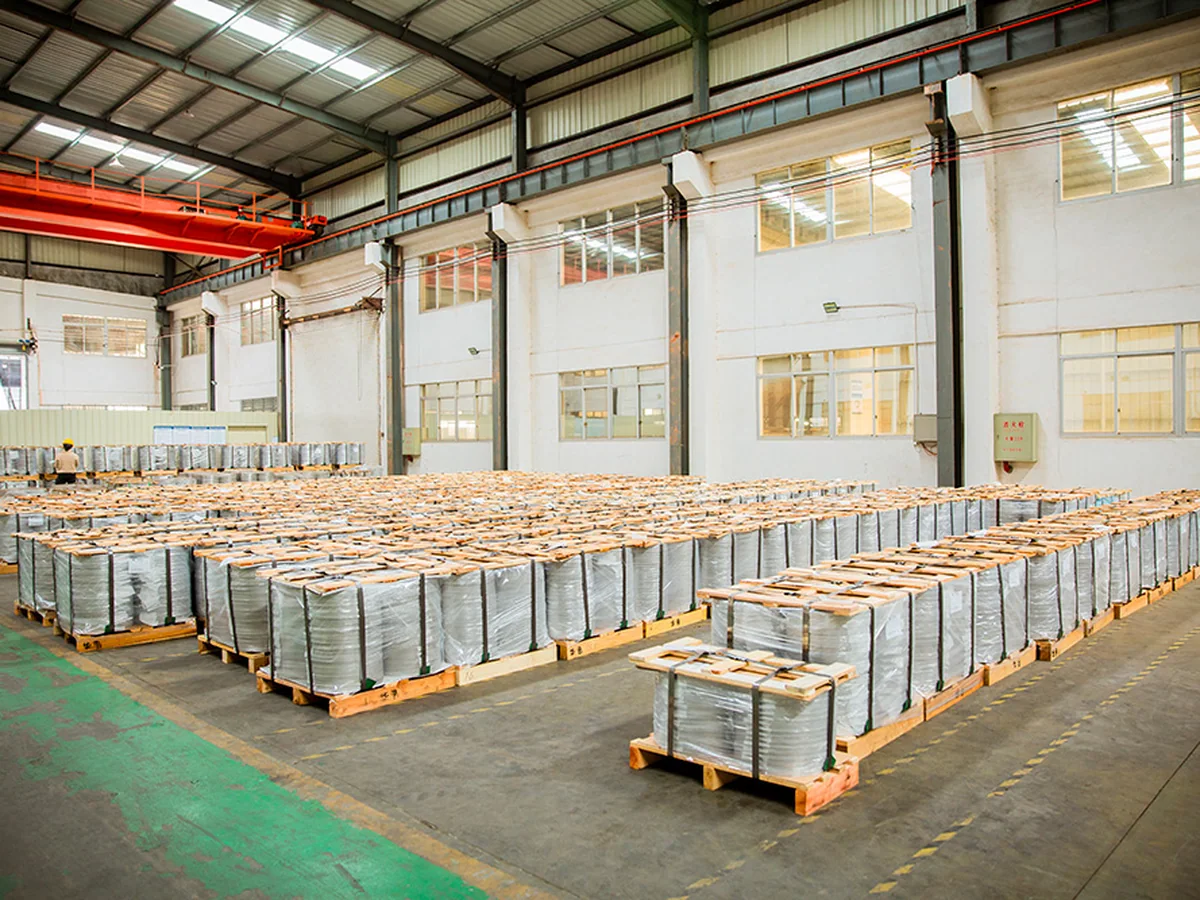
Clad metal materials for cookware production
Huahao produces bonded metal for cookware: three-ply SUS304 or SUS316L over an aluminium core with a magnetic SUS430 back, a five-ply stack with 3003 alloy in the core, and a copper-core variant. Material leaves the plant as plain sheet, embossed sheet, etched sheet, round discs or square blanks.
-
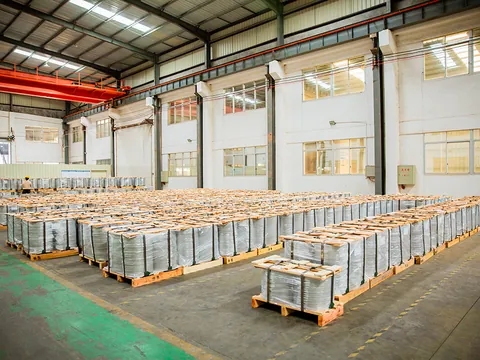 SS304 / aluminium / SS430 tri-ply clad material Tri-ply clad metal for cookware: SUS304 or SUS316L face, AL1050 aluminium core, SUS430 magnetic back. Plain, embossed. Read more
-
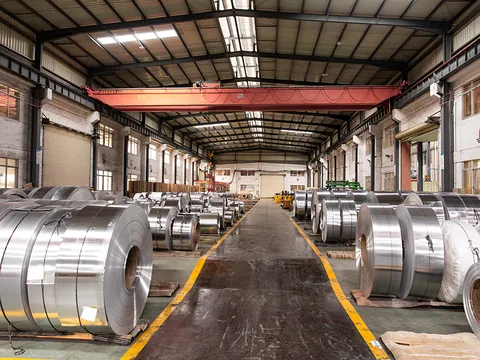 5-ply cookware clad metal Five-ply clad metal for cookware with an alloy aluminium centre: SUS304, AL1050, AL3003, AL1050 and SUS430 in one. Read more
-
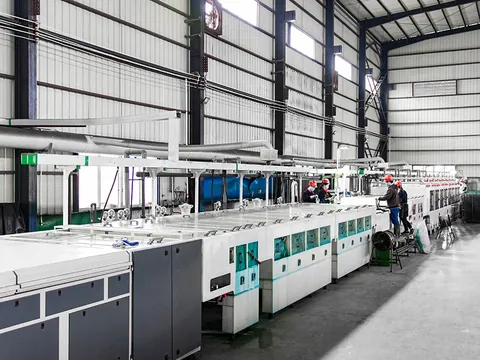 Copper-core clad metal for cookware Copper-core clad metal for premium cookware: stainless face, aluminium and a copper core for faster heat spread.. Read more
-
 Embossed and etched clad metal surfaces Embossed and etched clad metal surfaces for cookware: pressed dot and honeycomb patterns, fine etched textures,. Read more
- Custom cookware clad metal Custom clad metal for cookware: choose face grades, core, layer ratio, thickness and diameter from a drawing or a. Read more
-
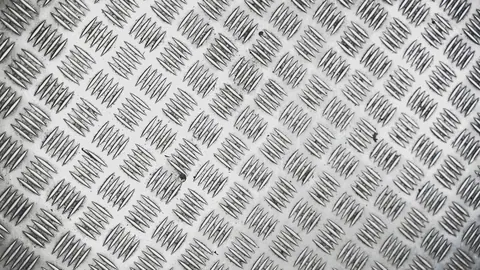 2-ply clad metal Two-layer clad metal with a stainless cooking face and an aluminium body, for pans that do not need induction.. Read more
-
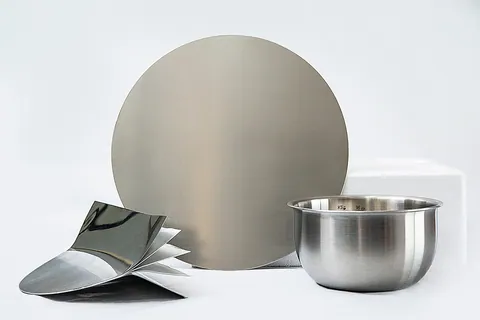 Clad circles and discs for cookware bodies Clad circles and discs cut to diameter from three-ply and five-ply material, for woks, pans and pressure cookers.. Read more
-
 Clad sheets and plates Bonded clad sheet and plate supplied flat and cut to size for cookware factories that blank in-house, with thickness,. Read more
At a glance
How the options compare
| Structure | Layer sequence | Typical use | Forms |
|---|---|---|---|
| 3-ply | SUS304 or SUS316L / AL1050 / SUS430 | Wok, soup pot, saucepan bodies | Plain sheet, embossed sheet, etched sheet, discs, square blanks |
| 5-ply | SUS304 / AL1050 / AL3003 / AL1050 / SUS430 | Heavier bodies, premium ranges | Sheet and discs |
| Copper core | SUS304 / AL1050 / Cu | Premium cookware, high conductivity | Sheet and discs, to project |
| Circles and blanks | Any confirmed structure above | Deep drawn pans and pots | Round discs, single-ear and double-ear blanks |
| Embossed and etched | 3-ply structures | Ranges sold on surface pattern | Sheet and round discs |
Six automated lines, and what they make
The plant runs six automated multi-layer composite lines and two automated etching lines. That split matters to a buyer: the composite lines set the layer structure, the thickness and the bond, while the etching lines add the surface pattern that many cookware ranges are sold on.
Standard production covers 304 and 316L as the food-contact face, 1050 pure aluminium as the conductive core, and 430 magnetic stainless as the induction face. The five-ply stack inserts 3003 alloy aluminium in the middle of the core. A copper-core variant is produced for buyers who need higher conductivity.
Plain, embossed or etched
Surface is a product decision, not a finish option. A plain sheet is what most cookware bodies use, because the cooking face is polished or brushed by the pan maker. An embossed sheet carries a pressed pattern, usually a dot or honeycomb field inside a smooth rim. An etched sheet is produced by a finer process that cuts a shallow relief into the surface, and it is the reason the two etching lines exist.
Pattern depth, pattern area and the smooth rim width are agreed from a sample or a drawing, because the tooling and the etch mask are made against it.
What a quotation needs
We quote a structure: grades in order, thickness per layer, total thickness, form and size, surface treatment, and the quantity. If any of those are open, the technical reply says which field has to be decided before a price is meaningful.
- Grade set, for example 304 + 1050 + 430 or 316L + 1050 + 430.
- Thickness per layer and total thickness with tolerance.
- Form: disc, square blank or sheet, with the size.
- Surface: plain, embossed or etched, and on which face.
- Cookware application and forming process.
- Monthly demand and destination port.
Questions
Common questions
Which structure do most cookware factories buy?
Three-ply 304 + 1050 + 430 in plain sheet or discs is the volume product, because it covers a wok, a soup pot and a saucepan with one material family. The 316L face is chosen where the buyer wants a higher grade in the specification.
Do you supply both sheet and discs?
Yes. Circles, square blanks and sheet are all produced. The form for a specific structure and thickness is confirmed in the quotation.
Is the pattern on embossed and etched sheet on the cooking face or the outside?
Usually the cooking face, where it protects the surface from scratches in use. Which face receives the pattern is stated in the specification and confirmed with the sample.
What is the minimum order?
MOQ depends on structure, thickness, size and whether the batch shares a production schedule. It is stated in each quotation rather than fixed for the whole catalogue.
Can I get a sample before ordering?
Yes. Send the structure and the size, and sample availability and freight terms are confirmed with the quotation.