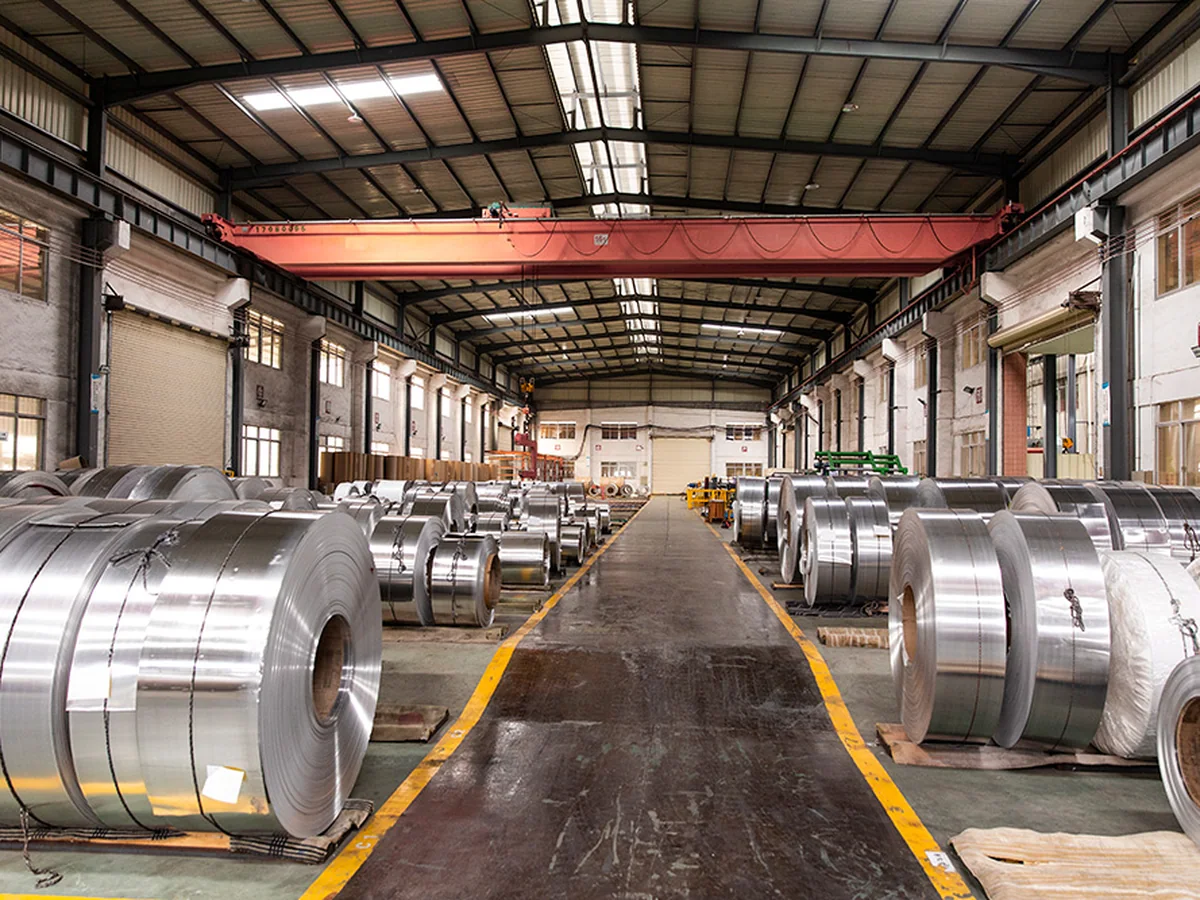
5-ply cookware clad metal
The five-ply structure adds an alloy aluminium layer to the core: SUS304 on the cooking face, AL1050, AL3003 and AL1050 in the middle, SUS430 on the induction face. The result is a heavier, more thermally stable sheet for cookware sold on performance. Huahao is a 5-ply clad metal manufacturer and supplier: a Fujian factory bonding five layers into cookware sheet and discs for plants that need slower, more even heat in bulk quantities.
At a glance
Specification at a glance
| Layer | Grade | Role |
|---|---|---|
| 1, cooking face | SUS304 | Food-contact surface |
| 2 | AL1050 | Pure aluminium, thermal conduction |
| 3 | AL3003 | Alloy aluminium, core strength and stability |
| 4 | AL1050 | Pure aluminium, thermal conduction |
| 5, induction face | SUS430 | Magnetic stainless for induction |
| MOQ | Quoted per structure and form | Agreed in the order confirmation |
| Sample policy | Sample discs or cut sheet with batch documents | Sample record before the run |
| Lead time | Quoted against a production slot | Confirmed at order |
Also specified as: five layer clad composite, multi-ply cookware sheet, 5-ply material with a 3003 core.
Reference values
5-ply layer structure (reference values)
Reference values, not a specification. These are the builds the market normally asks for at this ply count; the layer split for your pan is confirmed on the drawing before the first batch, and we will tell you when a requested split is outside what the line can bond.
| Layer | Grade | Thickness (reference) | Job |
|---|---|---|---|
| Cooking face | 304 | 0.40 mm | Food contact |
| Bond layer | 1050 aluminium | 0.80 to 1.00 mm | Heat spreading |
| Core | 3003 aluminium alloy | 0.50 to 0.60 mm | Stiffness, thermal mass |
| Bond layer | 1050 aluminium | 0.80 to 1.00 mm | Heat spreading |
| Outer face | 430 | 0.40 mm | Induction |
| Total | 5 layers | 2.90 to 3.40 mm | Heavier pan, slower hotspots |
How the five layers are made
The five-layer build is bonded and rolled as one sheet before it is cut to form. Because the core carries both 1050 and 3003 aluminium, the thickness split between the layers is fixed at the rolling stage, not during assembly.
What the third core layer changes
In a three-ply, the core is a single layer of pure aluminium. In this five-ply, the core becomes AL1050 + AL3003 + AL1050: two layers of pure aluminium around an alloy aluminium centre. The alloy in the middle adds strength to the core and holds the heat distribution more evenly across the disc, which is why ranges sold on thermal performance use it.
The two stainless faces keep their jobs. SUS304 is the cooking surface, SUS430 the magnetic face for induction. Total thickness and the ratio between the layers are set per order, because they decide both the forming behaviour and the weight of the finished pan.
Where five-ply earns its cost
Five-ply is bought by factories making cookware at a higher price point: thick-walled woks, heavy soup pots, ranges where the pan is expected to hold temperature and to feel substantial in the hand. On a thin, price-driven pan the extra layer adds cost without adding anything the buyer will notice.
The honest comparison is cost per finished pan, not cost per tonne. A five-ply that draws cleanly with low scrap can beat a cheaper three-ply that fails at the radius.
Forming risk and the sample stage
Thicker multi-layer sheet is less forgiving at the draw radius. Thinning, edge cracking and bond separation are the three failures to watch, and all three are cheaper to find on a sample disc than on a production run.
Send the drawing and plan a sample stage. Sample approval is also where the acceptance criteria get written down, which is what protects both sides if a later batch is disputed.
Questions
Common questions
Why use 3003 instead of more 1050?
3003 is an alloy with manganese, so it is stronger than pure 1050. Putting it in the centre of the core stabilises the middle of the stack, which matters on thicker sheet that is drawn deep.
Can the five-ply be supplied in 316L?
The five-ply structure is produced with 304 on the cooking face as standard. A 316L face is discussed per project and confirmed before quotation.
What thicknesses are available?
Thickness depends on the layer ratio and the diameter being cut. Send the target total thickness and the size, and the achievable range is confirmed.
Is five-ply available with a pattern?
Embossed and etched finishes are produced on the three-ply structures. For five-ply, ask specifically, since the surface route is confirmed per project.
How is the bond checked?
The test method and the acceptance criteria are stated with the batch documents for the structure being supplied. This page does not publish a single bond strength figure.