Copper-core clad metal for cookware
A copper core is bought for one reason: conductivity. Copper moves heat faster than aluminium, and the cookware range is sold on that. Huahao produces a 304 + 1050 + Cu structure, and the stack is confirmed per project because the copper ratio decides weight, cost and forming behaviour. Huahao is a copper core clad metal manufacturer and supplier: a Fujian factory bonding a copper core between aluminium and stainless for cookware plants that need fast lateral heat in bulk.
At a glance
Specification at a glance
| Field | Detail | Status |
|---|---|---|
| Structure | SUS304 / AL1050 / copper | Produced per project |
| Cooking face | SUS304 | Confirmed per order |
| Copper thickness | Set the ratio against total thickness | Agreed with the quotation |
| Total thickness | With tolerance | Quoted per order |
| Form | Discs and sheet | Confirmed per structure |
| Edge | Copper exposure and protection | Decided in the technical review |
| MOQ | Quoted per structure and form | Agreed in the order confirmation |
| Sample policy | Sample discs or cut sheet with batch documents | Sample record before the run |
| Lead time | Quoted against a production slot | Confirmed at order |
Also specified as: copper core composite, five layer sheet with a copper core, comparison against aluminium core tri-ply.
Reference values
Copper core layer structure (reference values)
Reference values, not a specification. These are the builds the market normally asks for at this ply count; the layer split for your pan is confirmed on the drawing before the first batch, and we will tell you when a requested split is outside what the line can bond.
| Layer | Grade | Thickness (reference) | Job |
|---|---|---|---|
| Cooking face | 304 | 0.40 mm | Food contact |
| Bond layer | 1050 aluminium | 1.00 mm | Bonding, stress |
| Core | Copper | 0.50 to 0.80 mm | Fast lateral conduction |
| Bond layer | 1050 aluminium | 1.00 mm | Bonding, stress |
| Outer face | 430 | 0.40 mm | Induction |
| Total | 5 layers | 3.30 to 3.60 mm | Copper responsiveness |
Copper, encapsulated
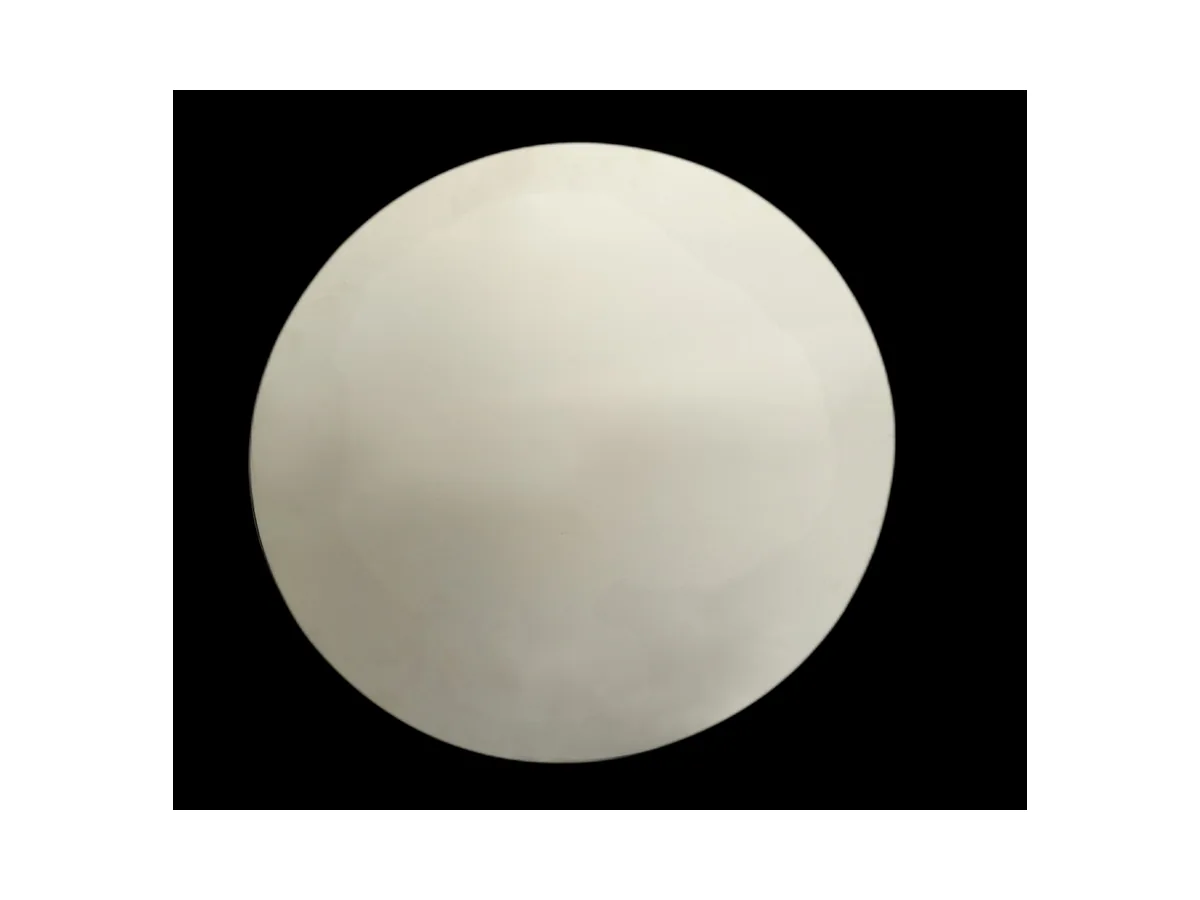
Copper core material is supplied as sheet or disc with the copper layer enclosed between stainless and aluminium, so the cooking face never contacts copper. Heat response improves without putting a copper surface in the pan.
What copper buys, and what it costs
Copper conducts heat faster than aluminium and holds it differently, so a copper-core pan responds quicker to a change in flame and recovers temperature better when food goes in. The cost is weight and material price, and a bond route that has to handle a third metal.
For a cookware range positioned on performance, that trade can be worth it. For a price-driven pan it rarely is, and the honest answer is a three-ply or five-ply aluminium structure.
The structure and what has to be confirmed
The structure produced is SUS304 / AL1050 / copper: stainless on the cooking face, aluminium as the transition layer, copper as the core. The aluminium layer matters because it manages the bond between stainless and copper, two metals that are not directly compatible in a rolling schedule.
Before quotation the plant needs the copper thickness, the total thickness, the form and size, the surface finish and the forming process. Whether the copper appears at the edge of the finished disc, and how that edge is protected, is decided at that stage.
Forming and thermal validation
A copper core changes the way the disc draws. The material is softer in the middle and the layers respond differently to the press, so a forming trial on the actual tooling is part of the project, not an optional extra.
Thermal claims belong to the finished pan, not to the sheet. Ask for a sample and validate in your own product before the packaging carries a claim.
Questions
Common questions
Is a copper core always better than a five-ply aluminium core?
It conducts faster and costs more. Whether it is better depends on what the product is sold on. A five-ply aluminium stack is often the better commercial answer.
Does the copper show at the edge of the disc?
In most structures the copper is enclosed by the outer layers after rolling, but it depends on the ratio and the edge condition. It is confirmed in the technical review rather than assumed.
Can the copper layer be made thicker?
Copper thickness is one of the variables, reviewed together with the total thickness, the form and the forming process.
Do you supply copper-core discs as samples?
Where the structure is producible, a sample is agreed with the quotation including size and freight terms.
Is copper core available with an etched surface?
Etched and embossed finishes are produced on the three-ply structures. For copper core, ask specifically and the surface route is confirmed.