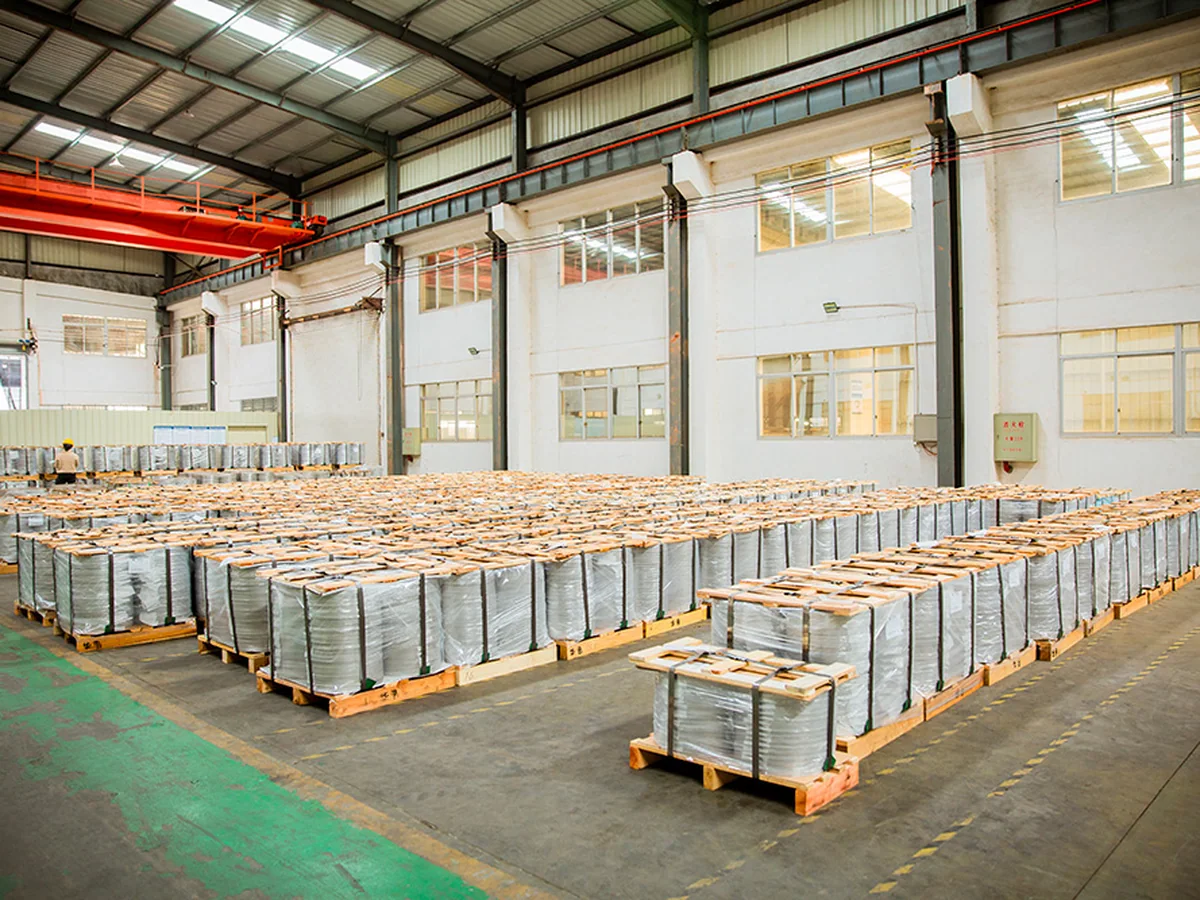
SS304 / aluminium / SS430 tri-ply clad material
Three layers bonded into one sheet: a stainless cooking face, a pure aluminium core that spreads heat, and a magnetic stainless back for induction hobs. Huahao produces the structure in 304 and in 316L, as plain sheet, embossed sheet, etched sheet, round discs and square blanks. Huahao is a tri-ply clad metal manufacturer and supplier: a Fujian factory bonding 304, 1050 aluminium and 430 into three-layer sheet, circle and blank form for cookware plants buying in bulk.
At a glance
Specification at a glance
| Field | What to specify | How it is confirmed |
|---|---|---|
| Cooking face | SUS304 or SUS316L | Stated per structure in the TDS |
| Core | AL1050 pure aluminium | Confirmed per structure and thickness |
| Induction face | SUS430 magnetic stainless | Confirmed per structure |
| Layer thickness | Each layer, and the ratio between them | Stated per structure |
| Total thickness | Finished thickness with tolerance | Quoted per order |
| Form | Sheet, embossed sheet, etched sheet, disc, square blank | Confirmed per structure |
| Surface | Plain, embossed or etched, and which face | Agreed from a sample |
| Documents | ROHS, REACH, food-contact report, inspection record | Listed in the quotation |
| MOQ | Quoted per structure and form | Agreed in the order confirmation |
| Sample policy | Sample discs or cut sheet with batch documents | Sample record before the run |
| Lead time | Quoted against a production slot | Confirmed at order |
Also specified as: tri-ply composite, three layer clad sheet, SS304 / aluminium (aluminum) / SS430 cookware material, tri-ply circle stock.
Reference values
3-ply layer structure (reference values)
Reference values, not a specification. These are the builds the market normally asks for at this ply count; the layer split for your pan is confirmed on the drawing before the first batch, and we will tell you when a requested split is outside what the line can bond.
| Layer | Grade | Thickness (reference) | Job |
|---|---|---|---|
| Cooking face | 304 (or 316L) | 0.40 to 0.50 mm | Food contact, abrasion, polishing |
| Core | 1050 aluminium | 1.60 to 2.20 mm | Heat spreading |
| Outer face | 430 | 0.40 to 0.50 mm | Induction, pan base |
| Total | 3 layers | 2.40 to 3.00 mm | Typical tri-ply range |
Catalogue
Grades and forms in the 3-ply catalogue
The 3-ply range is listed on the supplier's own catalogue as 23 stock variants of the same build. The cooking face can be 304 or 316L; the surface plain, etched, embossed or single-ear; the form circle, square blank or sheet.
| Variable | Options in the catalogue | What it changes |
|---|---|---|
| Cooking face grade | 304, 316L | 316L costs more and is chosen for stronger acid and chloride exposure |
| Outer face | 430 | Induction face, unchanged across variants |
| Surface | Plain, etched, embossed | Look, and whether the pan is sold polished |
| Form | Circle, single-ear blank, square blank, sheet | Nesting and press tooling |
| Core | 1050 aluminium | Heat spreading; thickness sets the total gauge |
Form and finish
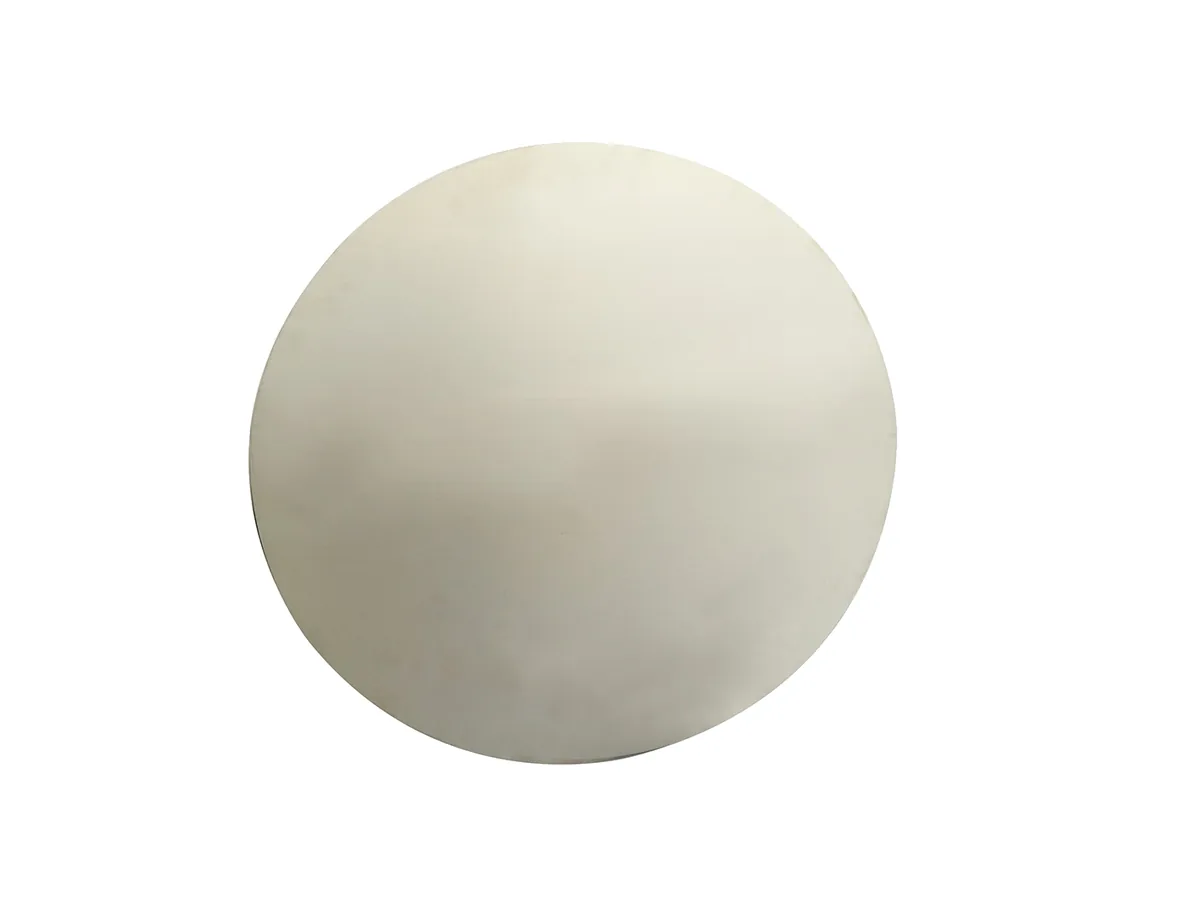
Supplied as round discs, square blanks or cut sheet. The cooking face is either polished or left as rolled, and the reverse carries the 430 layer that makes the body induction capable. Diameter, thickness and edge condition are cut to your drawing, with tolerances agreed per order.
What each layer is doing
The cooking face is SUS304, the food-grade stainless most cookware ranges specify. Where a buyer wants a higher grade in the specification, the same structure is produced with SUS316L on the cooking face, which Huahao lists as its medical-grade option.
The core is AL1050, a pure aluminium chosen for thermal conductivity and for how cleanly it bonds. It is the layer that decides how quickly heat spreads from the centre of the pan to the rim.
The back is SUS430, a magnetic stainless, so the finished pan responds to an induction coil. That is why a 304 + 1050 + 304 stack is not interchangeable with 304 + 1050 + 430 in an induction application.
Where tri-ply goes in a cookware plant
Woks, soup pots, saucepans, milk pots, hot pots and pressure cooker bodies are the main applications, with rice cooker inner pots taking a related structure. The material arrives either as a disc that is deep drawn into a body, or as sheet that the factory blanks itself.
Because the same structure is drawn to different depths by different factories, the forming trial matters more than the grade list. Two plants running identical sheet through different tooling and lubrication see different thinning at the radius, and that is where cracking and bond separation appear first.
Plain, embossed or etched
The plain sheet is the default. The embossed version carries a pressed pattern, typically a dot or honeycomb field inside a smooth rim, which is used on ranges where the cooking face is left unpolished. The etched version is cut by a finer process on the plant's etching lines and produces a shallow relief with a defined pattern area.
All three start from the same bonded sheet; they differ in the surface operation and in the tooling behind it. Pattern, depth and rim width are agreed from a sample before production.
Specification fields to settle before tooling
The table lists what the technical data sheet states for a tri-ply order. Where a value is not yet fixed for your structure, the quotation says so instead of quoting a plant-wide number.
If you have a drawing, the drawing wins over any table on this site. Send it with the enquiry and the review runs against your dimensions and tolerances.
Questions
Common questions
What is the difference between the 304 and the 316L version?
The cooking face grade. 304 is the standard food-grade choice for cookware; 316L is specified where the buyer wants a higher grade, and Huahao lists it as the medical-grade option. The core and the induction face stay the same.
Is 1050 aluminium the only core?
In the three-ply structure, yes: AL1050 pure aluminium. The five-ply structure adds 3003 alloy aluminium in the middle of the core.
Why is 430 used on the outside?
It is magnetic, so it responds to an induction coil, and it costs less than a 304 face in that position. It is not a cooking surface.
Can the material be supplied already patterned?
Yes. The same structure is produced as embossed sheet and as etched sheet, and those are separate product routes with their own tooling.
Can you supply a sample disc for a drawing trial?
Yes. Send the drawing or the structure with the diameter, and sample availability and freight terms are confirmed with the quotation.