Embossed and etched clad metal surfaces
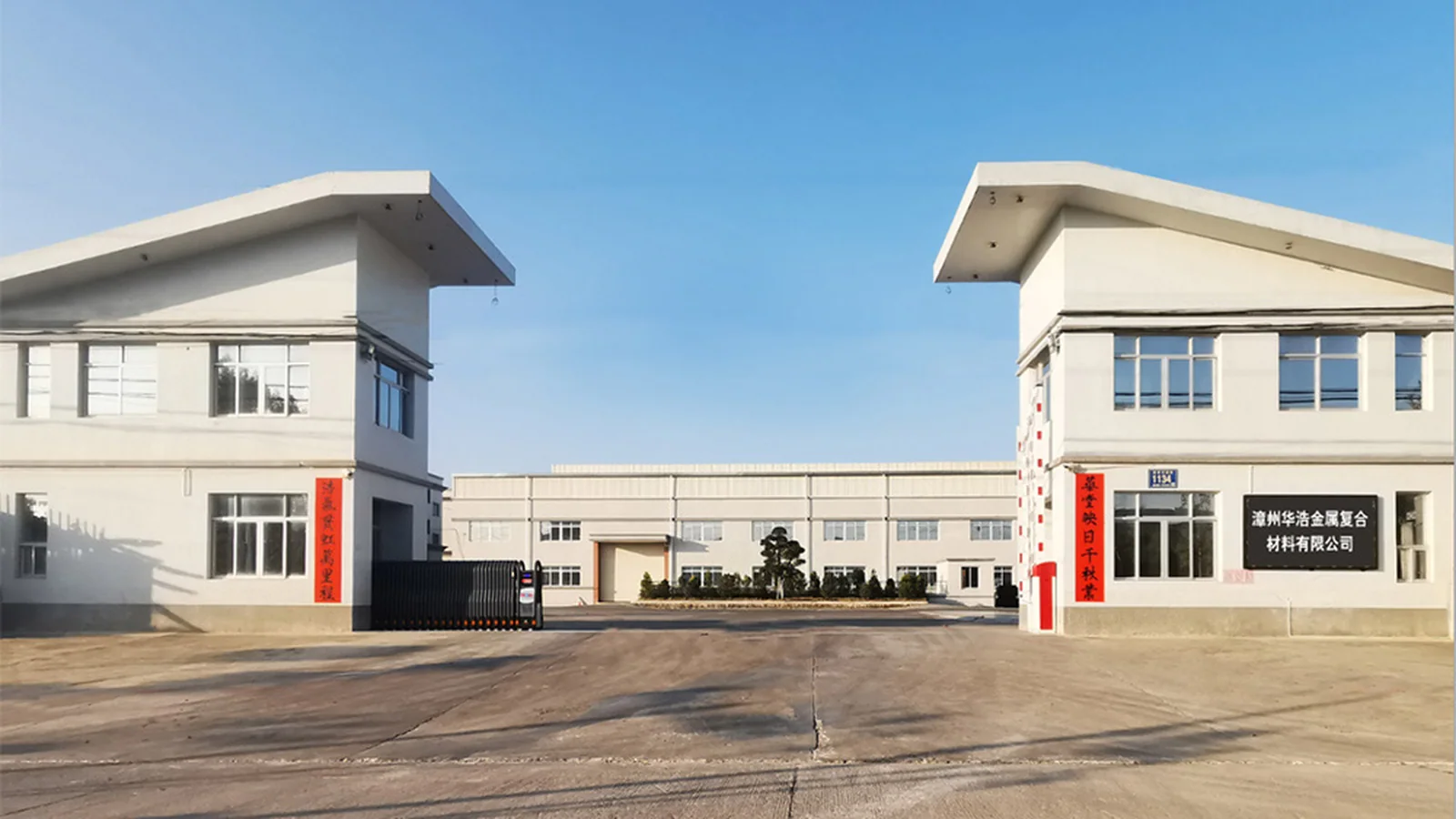
Huahao runs two automated etching lines alongside its six composite lines. That is what makes the patterned surfaces possible: a pressed pattern (embossed) for a coarse, durable texture, and an etched relief for a finer, sharper one. Huahao is an embossed and etched clad metal manufacturer and supplier: a Fujian factory rolling or etching a pattern into the cooking face before bonding, for cookware plants buying patterned material in bulk.
At a glance
Specification at a glance
| Process | How the pattern is made | Best for |
|---|---|---|
| Embossed | Pressed with a die under pressure | Repeating ranges, coarser texture, deeper relief |
| Etched | Metal removed through a mask on an automated line | Finer detail, pattern changes without new tooling |
| Plain | No surface pattern | Bodies that are polished or brushed by the pan maker |
| Face | Pattern on the cooking face or the outside | Agreed per product |
| Rim | Smooth border width | Part of the tooling or mask |
| MOQ | Quoted per structure and form | Agreed in the order confirmation |
| Sample policy | Sample discs or cut sheet with batch documents | Sample record before the run |
| Lead time | Quoted against a production slot | Confirmed at order |
Also specified as: patterned clad sheet, etched finish composite, embossed cookware material.
Reference values
Base structure under the pattern (reference values)
Reference values, not a specification. These are the builds the market normally asks for at this ply count; the layer split for your pan is confirmed on the drawing before the first batch, and we will tell you when a requested split is outside what the line can bond.
| Layer | Grade | Thickness (reference) | Job |
|---|---|---|---|
| Patterned face | 304 | 0.40 to 0.50 mm | Pattern rolled or etched before bonding |
| Core | 1050 aluminium | 1.60 to 2.20 mm | Heat spreading |
| Outer face | 430 | 0.40 to 0.50 mm | Induction |
| Total | 3 layers | 2.40 to 3.00 mm | Pattern depth inside the face gauge |
Pressed or etched
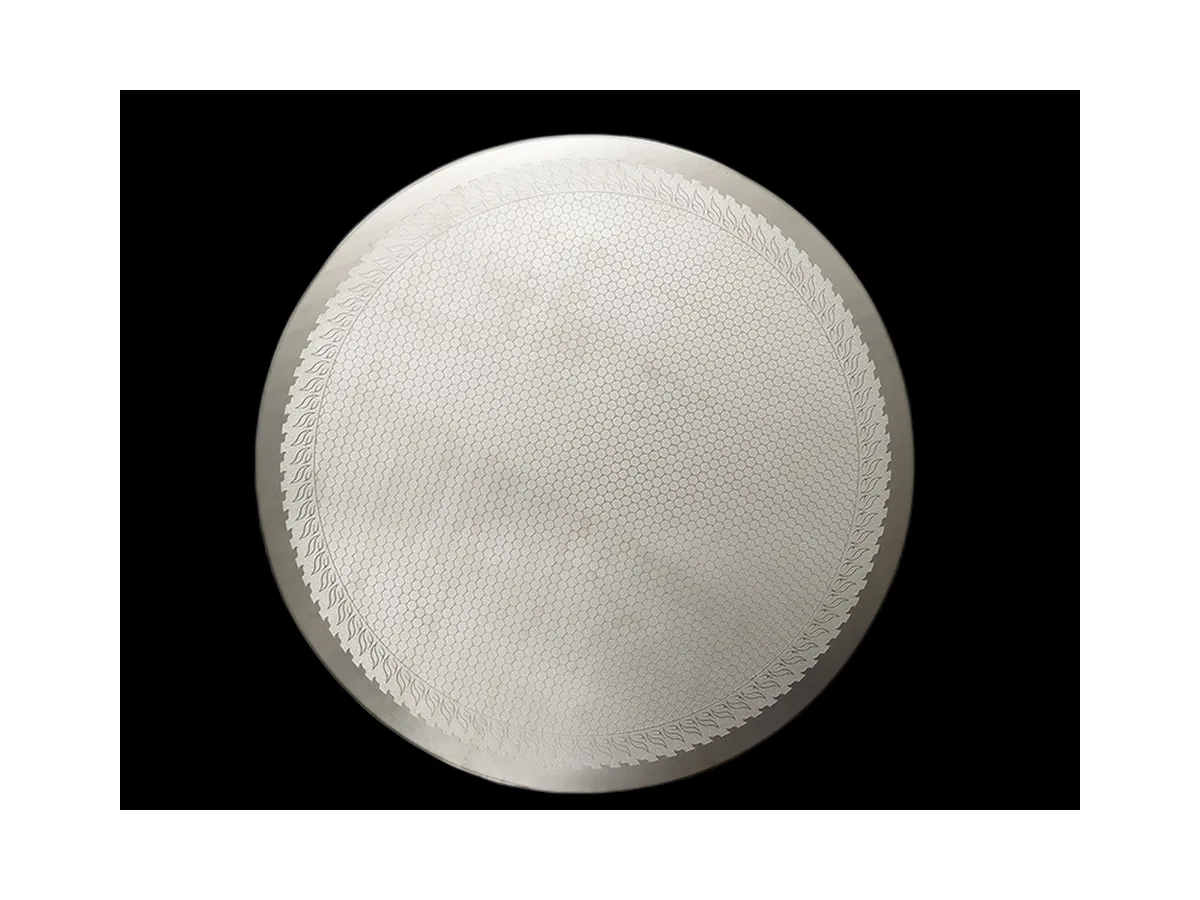
Patterned faces run on dedicated lines: pressing with a die for repeating ranges, etching through a mask for finer detail and a defined border. Pattern depth, covered area and rim width are approved from a physical sample before a production order.
Embossed: pressed into the sheet
An embossed surface is formed under pressure, so the pattern is a deformation of the sheet itself. Typical cookware patterns are a dot or honeycomb field inside a smooth rim, and the rim is what the pan maker polishes before assembly.
Because the pattern is pressed, the tooling is a die: pattern depth, dot pitch and rim width are fixed by it, and changing the pattern means changing the die. That makes embossing efficient for a range that repeats, and slow to change for a one-off.
Etched: cut into the surface
Etching removes metal through a mask, so it produces a shallower, finer relief with a sharper edge than pressing. The plant's two automated etching lines run this process, which is why the etched product can carry a defined pattern area, a detailed border and a smooth outer rim on the same disc.
Etching also allows pattern changes without a new die, at the cost of a mask and a process cycle. For a range with several patterns, that is usually the cheaper route.
What the pattern has to do
On a cooking face, texture is a functional decision as much as a decorative one. A textured surface reduces contact between food and metal, hides scratches from use, and changes how a metal spatula feels. It does not make an uncoated pan non-stick, and a supplier who claims otherwise is overstating it.
Pattern depth, the etched or pressed area, the smooth rim width and the face that carries the pattern are agreed from a sample. Send a photograph of the pattern you want matched, or a physical sample, and the tooling route is confirmed.
Questions
Common questions
Which is better, embossed or etched?
Pressed patterns are deeper and cheaper to repeat once the die exists. Etched patterns carry finer detail and change without a new die. The choice follows the pattern and the volume.
Does a textured surface make the pan non-stick?
It reduces contact between food and metal and hides scratches, but the pan is not non-stick in the coated sense. Claims should be tested on the finished product.
Can you match a pattern we already sell?
Send a photograph and a physical sample. We will say whether it can be pressed or etched, and what tooling or mask is needed.
Is the pattern available on the five-ply structure?
Patterned surfaces are produced on the three-ply structures. For five-ply or copper core, ask specifically and the route is confirmed.
Can the pattern be on the outside of the pan?
Yes, it is a specification decision. Most ranges put it on the cooking face, but the outside is possible and is confirmed with the sample.