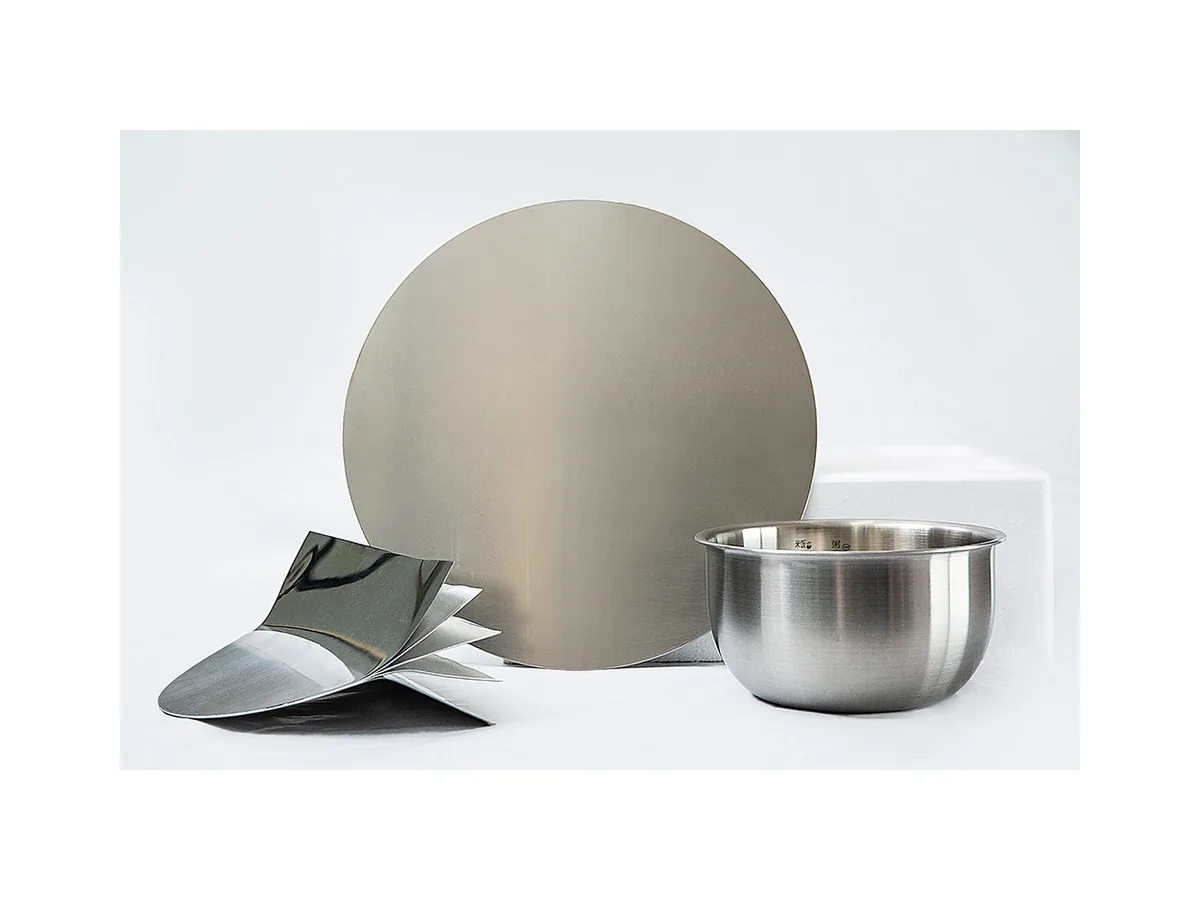
Clad circles and discs for cookware bodies
Chopped from bonded sheet to your diameter, press-ready, with the diameter, thickness, flatness and edge condition written into the specification. Huahao is a clad circle and disc manufacturer and supplier: a factory in Fujian blanking SS304 / 1050 aluminium / SS430 clad circles for cookware plants, supplying bulk and wholesale quantities against a quotation that follows the diameter, the gauge and the structure.
At a glance
Specification at a glance
| Field | What to specify | How it is confirmed |
|---|---|---|
| Structure | Grades per layer, in order | Structure drawing signed with the order |
| Common diameters | 200, 240, 280, 300 and 400 mm (reference values) | Confirmed against your drawing |
| Total thickness | Nominal plus tolerance | Thickness scan at head, middle and tail |
| Diameter | Nominal plus tolerance, and whether it is the pre-press or finished size | Measured on the disc, sample of the run |
| Flatness | Limit across the disc, after blanking | Surface plate check after 24 hours |
| Edge | Sheared, deburred or rolled | Visual and touch check on the sample |
| Surface | Plain, embossed or etched | Pattern sample approved before the run |
| Packing | Count per stack, interleaving, pallet weight | Packing record with the batch |
| Documents | Mill certificate, inspection record, compliance reports | Issued with the batch |
| MOQ | Quoted per structure and form | Agreed in the order confirmation |
| Sample policy | Sample discs or cut sheet with batch documents | Sample record before the run |
| Lead time | Quoted against a production slot | Confirmed at order |
Also specified as: SS304 / aluminium (aluminum) / SS430 composite circle, induction compatible clad disc, large diameter clad blank, cookware clad circle 200 to 400 mm, blanks for frying pans and saucepans in 2 to 4 mm, OEM orders and export packing for bulk quantities.
Circles are a tolerance product, not a material product
The material is the same three-ply or five-ply sheet that is sold as sheet. What changes is that the buyer no longer controls the cut: the supplier does, and with it the diameter tolerance, the edge quality and the flatness of the disc. Those three fields decide whether the disc runs in your press or fights it, and they belong in the specification next to the grade.
Diameter: pre-press or finished
Two diameters exist for every pan: the disc that goes into the press and the pan that comes out of it. A drawing that quotes the finished pan diameter without saying which one is measured is the single most common cause of a rejected first order. State the disc diameter, state the tolerance, and say whether it is measured on the blank or after forming.
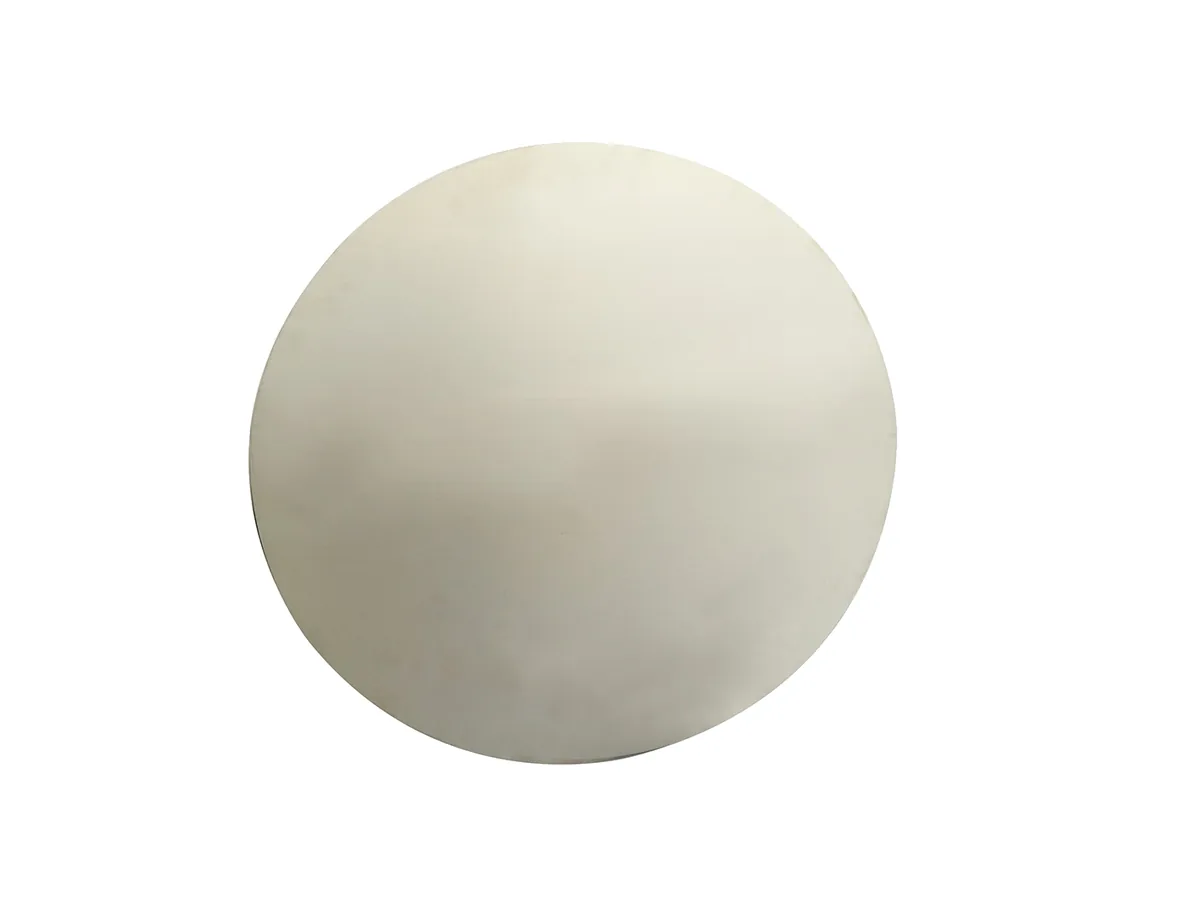
Flatness after blanking
A disc has no residual sheet around it to hold it flat, so any stress the anneal failed to remove shows up as a dished or waved blank. This is why flatness is measured on the disc, not on the sheet it came from, and why it is checked again a day after cutting. A disc that is flat on the pallet and dished on the press is a stress problem, not a handling problem.
Edge condition and the drawing operation
Sheared edges on clad can start a separation that only opens once the material is stretched. If the part is deep drawn, specify a deburred edge and ask which route the edge takes. If the part is only flanged, a standard sheared edge is normally enough.
Packing that matches the press
Discs are stacked to a count, interleaved where the cooking face must stay unmarked, strapped and labelled with the batch reference. The count per stack matters when the press operator feeds from a fixed stack; it costs nothing to specify at order and is annoying to discover at destination.
Questions
Common questions
What diameters can you cut?
Diameter is a tooling question rather than a material one, so the limit is your drawing and the nesting efficiency, not the structure. Send the diameter and the annual volume and the cutting route is confirmed with the quotation.
Do circles cost more than sheet per kilo?
Yes, because the blanking web is priced into the disc. Compare the disc price against sheet price plus your own blanking cost and the value you can recover from offcut.
Are the discs annealed before or after cutting?
The anneal is applied to the sheet before blanking, which is why flatness is specified on the disc as well as on the sheet.
Can you supply discs with an embossed or etched face?
Yes. The pattern is applied to the sheet and the disc is cut from it, so the pattern area and rim width are agreed before blanking.
How are samples packed?
A small stack, interleaved, with the batch reference and the documents for that batch. A sample without a batch reference cannot be compared with the production run.