Circles, sheet or strip: where the scrap goes decides the form
The same material sold three ways carries three different costs. The choice is not about convenience; it is about who owns the blanking scrap and who carries the tolerance.
At a glance
Specification at a glance
| Form | What you receive | Who blanks | Best when |
|---|---|---|---|
| Circle / disc | Cut discs to your diameter, stacked | Supplier | You have no press, or volume is low, or you want zero scrap handling |
| Square / rectangular blank | Cut blanks to a size | Supplier | Your part is not round, or the nest needs to be defined by the supplier |
| Cut sheet | Sheet sheared to a size | You | You blank in-house and want the web |
| Full sheet / plate | Standard sheet | You | You nest several parts and control yield |
| Strip / coil | Slit coil to width | You | High volume, continuous press line, tight width tolerance |
The scrap is the argument
Blanking a 300 mm disc from sheet leaves a web that is often 20 to 35 percent of the area, depending on the nest. If the supplier blanks, that web is priced into the disc. If you blank, you own both the scrap value and the handling cost.
The arithmetic that decides it: disc price minus sheet price, compared with your own blanking cost per piece plus the recoverable value of the web. In a plant already running a press with spare capacity, sheet usually wins. In a plant buying material for the first time, discs remove a whole process from the plan.

Tolerance moves with the form
A disc carries a diameter tolerance and a flatness after cutting. Sheet carries a thickness tolerance and a flatness as delivered, and releases stress when you cut it. Strip carries a width tolerance and a coil-set that the press has to handle.
Whichever you buy, the tolerance that matters is the one measured on the part you feed to the press, not on the material before cutting.
Storage and handling
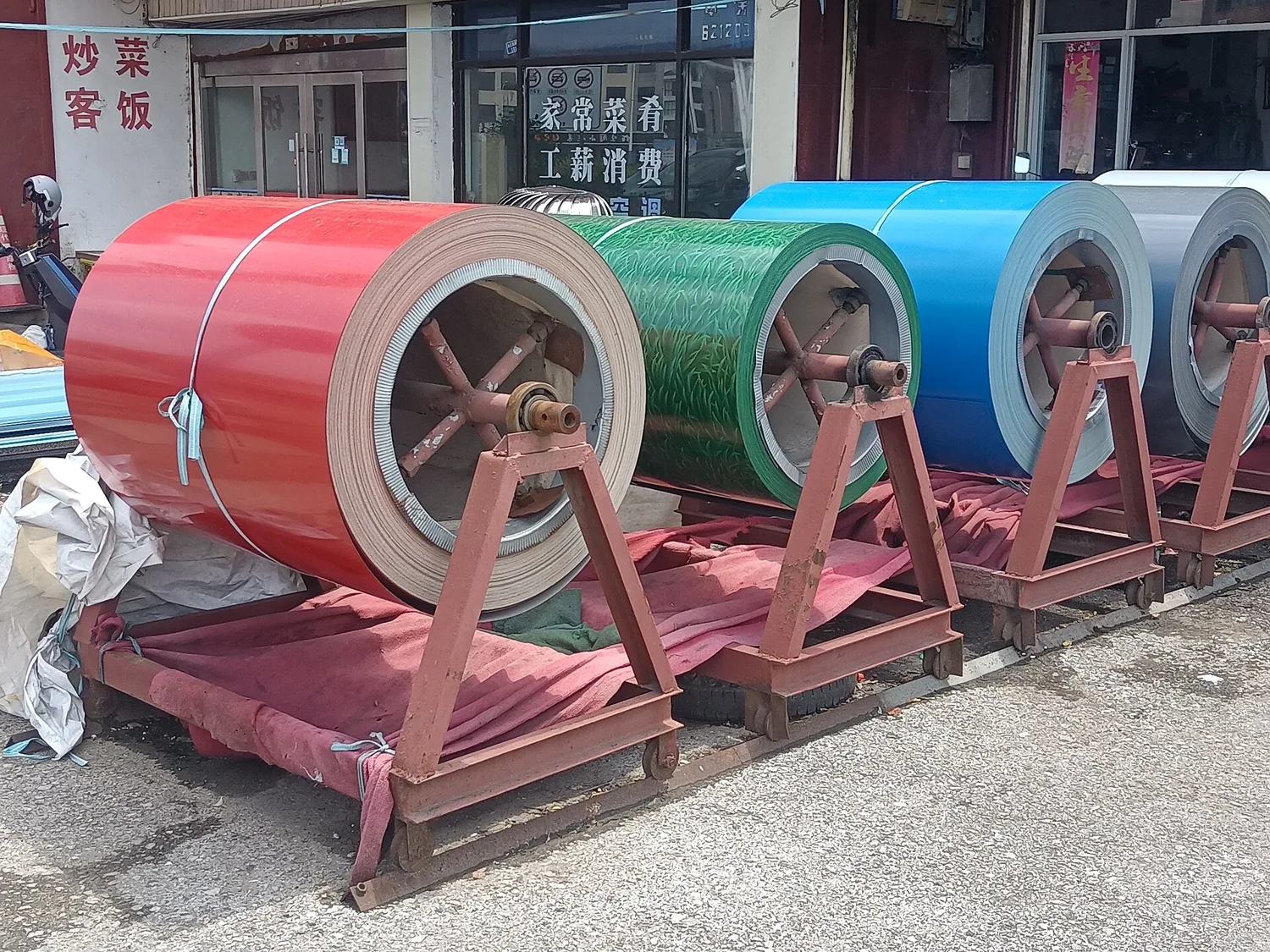
Circles store in stacks, take little floor space and are easy to count. Sheet stores flat, needs a dry floor and a way to keep bundles from rusting at the edges. Coil needs a decoiler and a cradle, and a coil that sits too long on a floor takes a set that shows up as a wave in the blank.
If your plant is short of dry storage, that alone can decide the form.
When strip makes sense
Strip is the highest-throughput route and the least forgiving. Width tolerance is tighter, the coil has to suit your decoiler, and a stop-start press line wastes the advantage. For a factory running a progressive die on a fixed pan size at volume, strip is the cheapest per piece by a clear margin.
Specifying the form
Give the form, the dimensions and the tolerance on the fed part, the flatness limit, the edge condition, the packing (count per stack or bundle weight) and the batch documents. Then state the annual and monthly volume, because the form that wins at 5 tonnes a year is rarely the form that wins at 200.
Questions
Common questions
Are discs more expensive per kilo than sheet?
Yes, because the blanking web is included in the disc price. Whether that is more expensive per part depends on your own blanking cost and what you can do with the web.
Can you supply strip in a width I specify?
Yes, slit to width. The width tolerance and the coil weight are agreed with the order, and the coil has to suit your decoiler.
Do you cut non-round blanks?
Yes: square, rectangular and single-ear blanks. The nest and the tooling are agreed from the drawing.
What is the smallest order for discs?
It is quoted rather than published, because the minimum sensible run depends on diameter, gauge and structure.
Does cutting to size affect flatness?
Yes. Cutting releases stress, which is why flatness is specified on the cut part and checked again after a day.