Surface treatment
Embossed vs etched: choosing a clad surface
A patterned cooking face is a product decision before it is a process decision. Pressing and etching produce different depth, different detail and different tooling economics. This guide explains the trade.
At a glance
Specification at a glance
| Item | Embossed | Etched |
|---|---|---|
| How made | Pressed with a die | Metal removed through a mask |
| Relief | Deeper | Shallower, sharper edge |
| Detail | Coarser | Finer |
| Change cost | New die | New mask |
| Best for | Repeating ranges | Detailed or changing patterns |
How embossing works
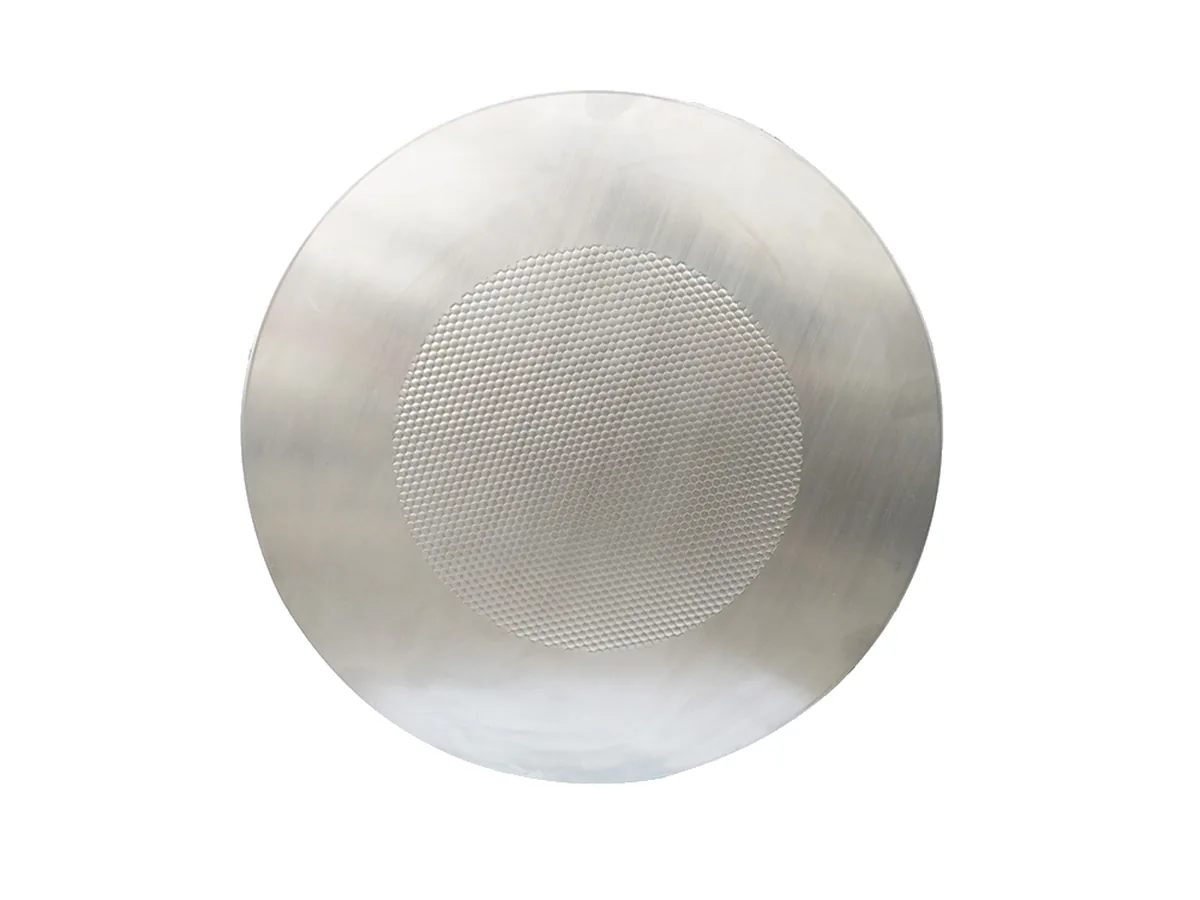
The sheet is pressed with a die, so the pattern is a deformation of the metal itself. Typical cookware patterns are a dot or honeycomb field inside a smooth rim, and relief depth is set by the die.
Embossing is efficient where a pattern repeats across a range, because the die cost is amortised over volume. It is slow to change, because a new pattern means a new die.
How etching works
Etching removes metal through a mask, producing a shallower relief with a sharper edge and finer detail than pressing. Huahao runs two automated etching lines for this, which is what allows a defined pattern area, a detailed border and a clean rim on the same disc.
A pattern change needs a new mask rather than a new die, so etching suits ranges with several patterns or with frequent design changes.
What the pattern does in use
A textured cooking face reduces contact between food and metal, hides scratches from use, and changes how a metal utensil feels. It also changes cleaning: food can lodge in a deep pattern, which is why the rim is usually left smooth on both pressed and etched products.
What it does not do is make an uncoated pan non-stick. A supplier who claims that is overselling the surface, and the claim will be tested by the buyer's customer.
How to decide
If the pattern is coarse and repeats across a range, press it. If it is fine, detailed, or likely to change between seasons, etch it. If the range also has to meet a scratch-resistance claim in a test, agree the test and the acceptance criteria before the tooling is made.
Either way, approve a physical sample. A pattern that looks right in a photograph can feel wrong in the hand.
Questions
Common questions
Which pattern is more durable?
Pressed relief is deeper and generally more resistant to wear in use. Etched relief is finer but still survives normal cooking and cleaning.
Can a pattern be applied to five-ply?
Patterned surfaces are produced on the three-ply structures. For five-ply or copper core, ask specifically.
Is the pattern on the inside or outside?
Most ranges put it on the cooking face. The outside is possible and is confirmed with the sample.
Does the pattern affect the bond?
A surface operation happens after bonding, so it does not change the bond. It can affect how the surface cleans and how the finish wears.
Can you copy a pattern from a photograph?
A photograph is enough to start. Production needs a physical sample or a drawing of the pattern, because depth and pitch cannot be measured from an image.