Lead times: where the wait actually comes from
A lead time is a queue plus a process. Buyers who know which one they are waiting on can plan a launch; buyers who accept a single number can only hope.
At a glance
Specification at a glance
| Stage | What happens | What can push it out |
|---|---|---|
| Enquiry to quotation | Structure checked against the line | An incomplete structure |
| Sample | Cut from stock or from a run | A bespoke pattern or gauge |
| Run slot | The structure is scheduled on the line | Peak season, existing programmes |
| Bonding and anneal | The material is made | Rework after a failed inspection |
| Cutting | Discs or blanks | New tooling, tight tolerance |
| Documents and packing | Certificates, packing list, marking | Changes to the invoice description late in the day |
| Sea freight | Transit to destination port | Port congestion, blank sailings |
The queue is the variable
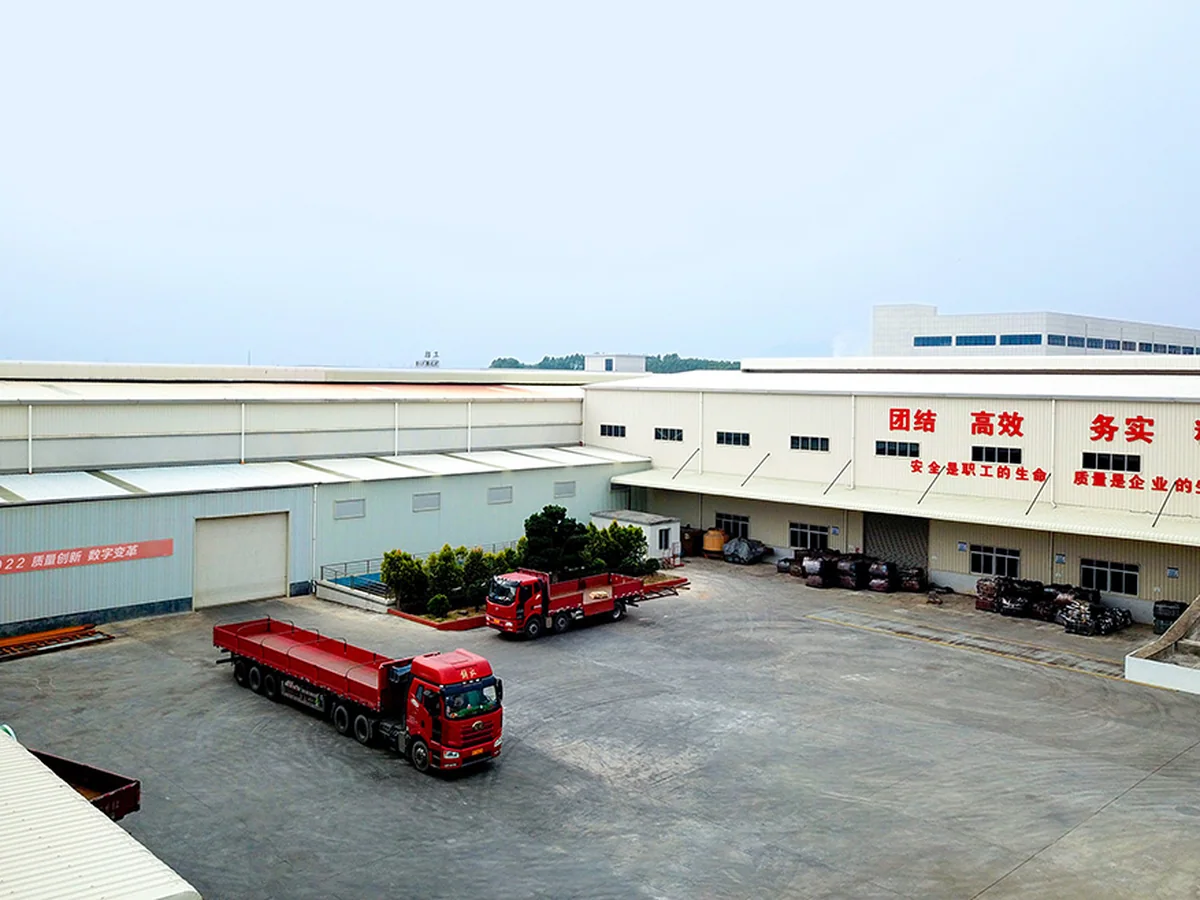
Process time for a standard structure is predictable: the material is bonded, annealed, cut and packed in a sequence the plant runs every week. The unpredictable part is the slot, because the line is shared with other programmes and with whatever was scheduled first.
That is why a supplier asking "when do you need it" is not being polite. A date that fits a gap in the schedule is often shorter than a date that does not, at the same price.
What changes a date after it is given
Three things, and all three are buyer-driven more often than not: a structure change after the slot is booked, a tolerance tightened at the sample stage, and an invoice description that has to be rewritten for the destination. Each reopens a step that was already planned as done.
Planning a launch backwards
Start from the retail date, subtract the sea transit and the port buffer, subtract the packing and document step, subtract the run and cut, and you have the date the run slot has to be booked. That number, not the lead time, is what should be in the launch plan.
For a first order add the trial before it. The trial is the step most often left out of the plan and most often the reason a launch slips.
Keeping a date
Freeze the structure at the sample stage, agree the invoice description at order confirmation, and keep the tolerance decided before the slot. Then ask for the run date in writing, not the lead time: a run date is a fact the supplier controls, a lead time is an average.
Questions
Common questions
How long is your lead time?
It is quoted per order, because it is a run slot plus process time. The quotation states the run date and the shipping window rather than a single average.
Can you expedite an order?
Sometimes, if a slot is free and the material is a structure already running. It is asked at the enquiry, not after the order.
Does a bigger order take longer?
Usually yes, because it occupies more line time, but the difference is in the run, not in the setup.
What is the fastest route for a first order?
A standard structure at a stock gauge, cut to a stock diameter, with documents agreed at confirmation. Every deviation adds a step.
Why does the date move after the sample?
Because the sample often changes the structure, the tolerance or the surface, and each change reopens a planned step.