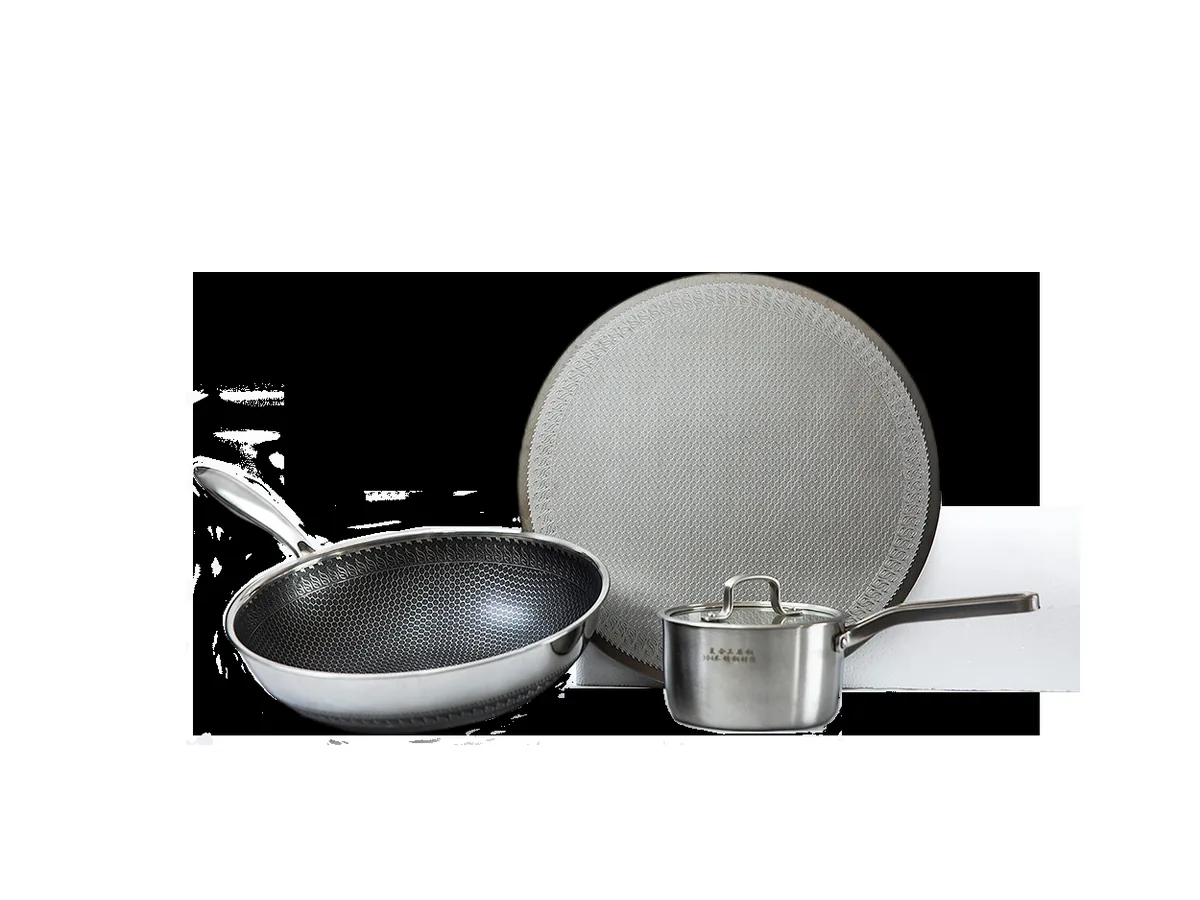
Induction base inserts for aluminium pans
An aluminium pan cannot heat on an induction hob without a magnetic path. The insert is that path, and how it is attached decides whether the pan survives a dishwasher and a decade of use.
At a glance
Specification at a glance
| Type | How it works | Where it is used |
|---|---|---|
| Solid 430 disc | Magnetic disc attached to the base | Entry aluminium pans |
| Clad insert 430 / aluminium | Magnetic layer plus spreading layer | Mid-range pans needing evenness |
| Impact bonded base | Insert bonded under pressure to the base | Higher volume production |
| Press fit insert | Disc pressed into a recess | Low volume, repairable |
| Full clad base | Whole base is clad material | Premium: no separate insert |
| Reference values | Thickness and diameter follow the pan | Confirmed per drawing |
What the insert actually does
Induction works by inducing currents in a magnetic material. Aluminium is not magnetic, so the insert provides the layer that couples to the coil. Everything else about the insert is about metal thickness and how well it stays attached.
Attachment is the weak point
A bonded or press-fit insert creates a seam. That seam sees thermal cycling in service, dishwasher chemistry, and impact from being set down. Separation starts at the edge of the seam, which is why edge quality on the insert matters as much as the alloy.
Evenness after the insert
The insert heats; the aluminium base spreads. A thin insert heats a small ring and the pan shows a hotspot above it. A clad insert adds a spreading layer, which is why it costs more and performs better under a crowded pan.
What to specify
Insert diameter and thickness, alloy, flatness before attachment, edge condition, and the attachment method. Then the dishwasher exposure, because that is what most often decides whether a seam survives.
Testing a base before launch
Boil-dry cycles, a dishwasher run and a drop test on a concrete floor tell more than a bond specification. Three pans through that sequence will expose a seam that a laboratory test passes.
Questions
Common questions
Can any aluminium pan be made induction-ready?
Yes, with an insert or a clad base. The question is whether the attachment survives service, not whether it heats.
Is a clad insert worth more than a plain disc?
It spreads heat better and costs more. On a thin aluminium pan the difference is visible; on a thick one it is small.
Why does an insert separate?
Usually edge quality, a contaminated bond face, or thermal cycling combined with dishwasher chemistry. The failure starts at the seam edge.
Do you supply inserts alone?
Yes: 430 discs and clad inserts, cut to the diameter and thickness the base requires.
How is the insert attached?
Impact bonding at the pan maker, or press fitting into a recess. Both are processes at the cookware factory, not at the material supplier.