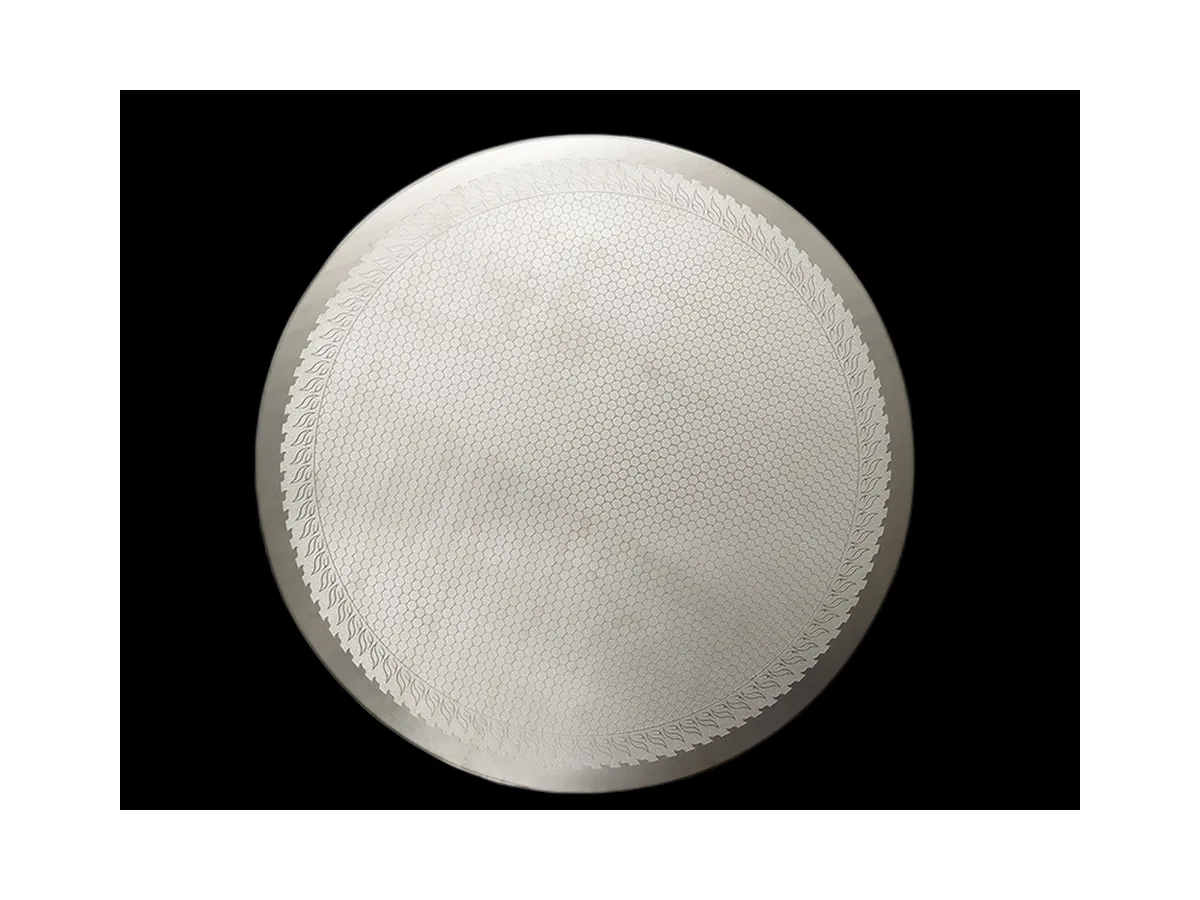
Reading surface defects on clad material
Most surface marks are cosmetic and a few are structural. The difference is usually visible in one dimension: whether the mark changes the profile of the surface or only its colour.
At a glance
Specification at a glance
| Mark | What causes it | Verdict |
|---|---|---|
| Oxidation tint | Annealing atmosphere | Cosmetic, removed by pickling or polishing |
| Water stain | Moisture trapped in the bundle | Cosmetic, but a sign of packing failure |
| Roll mark | Roller condition or wrap on a particle | Cosmetic if shallow, structural if it prints through |
| Rolled-in scale | Scale pressed into the surface during rolling | Structural: cannot be polished out |
| Scratch | Handling, shear, or a dirty guide | Depends on depth against the finish spec |
| Lap or seam | Folded metal rolled flat | Structural: reject |
| Embedded iron | Tooling contamination | Starts pitting later: clean or passivate |
| Edge burr | Shearing | Cosmetic until it starts a crack in the draw |
Profile or colour
Drag a fingernail across the mark. If it catches, the metal has moved and the depth matters. If it does not catch, the mark is a film or a tint and polishing or picking will take it off. That single test separates the two categories before anyone argues about acceptance.
The marks that come from the mill
Oxidation tint and rolled-in scale both come from hot processing. The first is a film and the second is metal oxide pressed into the surface. A supplier who says both will polish out is either guessing or hoping the buyer will not check.
The marks that come from handling
Scratches, water stains and embedded iron come after the mill: from shear guides, from bundles dragged across a bench, from condensing moisture inside wrapping. They are the marks a buyer sees most and the ones a supplier can most easily prevent.
Water stain inside a bundle is worth reporting even when it is harmless, because it says the packing is letting moisture in and the next shipment may be worse.
What belongs in the acceptance standard
Name the finish, name the Ra range, name which defects are rejectable and at what size, and name the inspection light. Without a light and a distance, two inspectors will disagree on the same sheet.
What to do with a rejected lot
Photograph the mark with a scale, note where it sits (face, base, edge), and state the criterion it fails. A rejection that names the criterion gets a credit or a replacement; a rejection that says "bad surface" starts an argument that lasts a month.
Questions
Common questions
Is oxidation tint a defect?
It is cosmetic. It comes from the annealing atmosphere and is removed by pickling or polishing. It matters only if the finish spec does not allow it.
Can a scratch be polished out?
If it is shallower than the finish allowance. A scratch deep enough to leave a groove after polishing is a reject for that finish.
What does a water stain indicate?
Moisture inside the bundle. Usually harmless on the face, but it says the wrapping or the desiccant failed and should be raised with the supplier.
How should a surface be inspected?
State the light, the distance and the Ra range in the specification, then inspect under those conditions. An unspecified inspection is an opinion.
Do these marks affect the bond?
Rolled-in scale and laps can. A surface tint or stain does not.