Material
Hardness and temper in clad sheet
Two sheets can carry the same grade and the same gauge and behave differently in the press. The difference is temper, and temper is set by the last thing that happened to the metal.
At a glance
Specification at a glance
| Condition | What it means | Effect in the press |
|---|---|---|
| Annealed | Softest, recrystallised | Best elongation, most springback control needed |
| Skin passed | Light final reduction | Flatter, slightly harder, better surface |
| Quarter hard | Moderate cold work | More strength, less elongation |
| Half hard | More cold work | Limited forming, used for flat parts |
| Full hard | Maximum cold work | Flat parts only |
| Reference values | Hardness figures vary by structure | Agree the condition, not just the grade |
Temper is a process state, not an alloy
304 is 304. What changes is how much it was worked after the last anneal and how that anneal ran. A soft anneal gives elongation for a deep draw; a skin pass flattens the sheet and adds a little strength, which improves flatness at the cost of a little ductility.
Measuring hardness on a layered material
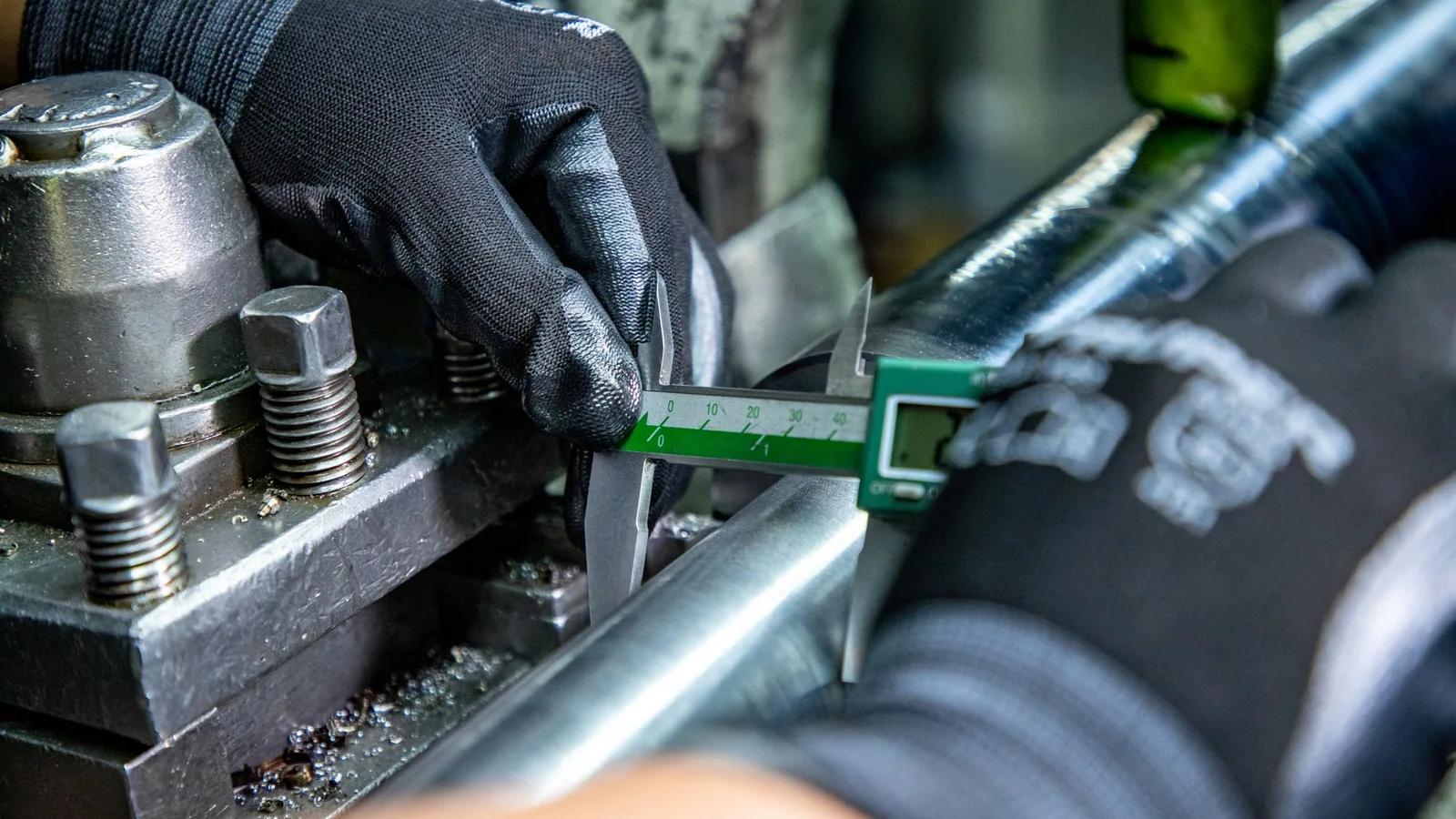
A hardness reading on a clad sheet measures the surface it touches, not the stack. A reading on the stainless face says nothing about the aluminium core, and the two cannot be averaged. When a buyer asks for a hardness figure, the answer has to name the layer and the method.
Why the same grade draws differently
Because the anneal was different, or the sheet was skin passed and the previous lot was not, or the aluminium core came from a different mill. None of these are visible on the certificate if the certificate only lists chemistry.
What to specify
Ask for the condition rather than a hardness number: annealed, skin passed, or a named temper. Then ask which layer the figure refers to if a number is quoted. That pair of questions prevents most of the surprises.
Questions
Common questions
Does hardness matter for a pan?
For forming, yes. A softer sheet draws deeper before cracking. For the finished pan, the difference is small once the part is formed.
Can you supply a specific hardness?
The condition is agreed and inspected; a hardness figure is quoted against a named layer and method.
Why did the last lot crack and this one not?
Usually a different anneal or a different core source. Ask for the condition and the lot records rather than a new grade.
Does annealing change the bond?
It can, if the cycle is wrong for the structure. The bond is checked after annealing rather than assumed.
Is a harder sheet flatter?
Usually, which is why a skin pass exists. Flatness and ductility trade against each other.